

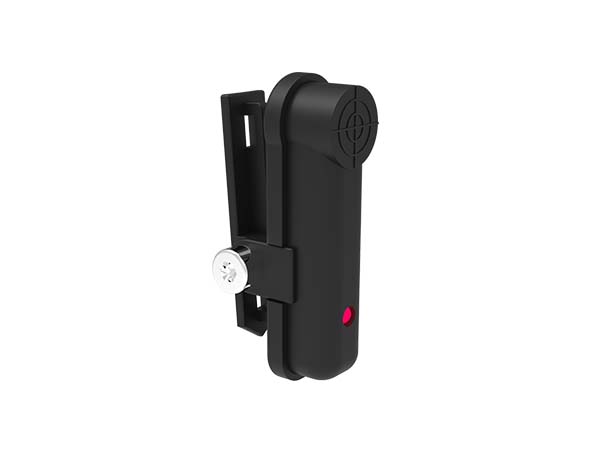
Dual Battery Ebike Systems are becoming increasingly popular among riders who want longer range, stronger power support,
and more stable performance on demanding routes. A dual battery ebike range test is one of the most useful ways
to understand how much real-world distance an e-bike can cover when powered by two batteries, such as a 48V 20Ah plus 48V 15Ah
configuration. This setup is especially relevant for long-distance commuting, cargo hauling, off-road riding, and performance-focused
electric bicycles that require higher capacity and better current support.
In simple terms, a Dual Battery System combines two battery packs to increase total energy storage. For example, a 48V 20Ah
battery and a 48V 15Ah battery together provide a combined capacity of 35Ah at 48V. That means the system
can store significantly more energy than a single pack, helping the ebike travel farther under normal riding conditions. However, actual
range depends on many factors, including rider weight, terrain, speed, throttle usage, pedal assist level, tire pressure, motor efficiency,
weather, battery health, and especially controller draw.
This guide provides a clear, SEO-friendly overview of dual battery ebike range testing, controller draw, battery capacity calculation,
performance expectations, and practical specifications. It is written for general industry use and can be inserted directly into a blog post,
category page, product guide, or technical resource page.
A dual battery ebike is an electric bicycle equipped with two separate battery packs that work together to supply power to the motor system.
The batteries may be connected in parallel through a properly designed dual battery controller, battery combiner, or battery management setup.
In most cases, the goal is to increase total range, improve power delivery, reduce voltage sag, and extend ride time.
Dual battery ebikes are commonly used in:
When comparing a single battery setup with a dual battery setup, the biggest advantage is usually more total watt-hours.
Watt-hours are the most accurate way to estimate energy storage and range potential.
To understand a 48V 20Ah plus 48V 15Ah dual battery system, it helps to calculate total energy capacity.
Energy in watt-hours is calculated using the formula:
Watt-hours (Wh) = Voltage (V) × Amp-hours (Ah)
For the first battery:
48V × 20Ah = 960Wh
For the second battery:
48V × 15Ah = 720Wh
Combined total energy:
960Wh + 720Wh = 1680Wh
So, a 48V 20Ah plus 48V 15Ah dual battery ebike system provides approximately 1680Wh of usable nominal energy.
This is a strong capacity level for riders who need extended mileage, though the final usable energy may be slightly lower due to voltage limits,
battery protection settings, controller behavior, and real-world conditions.
One of the most important factors in any dual battery ebike range test is controller draw. Controller draw refers
to how much electrical current the motor controller pulls from the battery system during riding. It is usually measured in amps (A).
Higher controller draw means the motor demands more power. This can improve acceleration, hill climbing, and top-end performance, but it also
reduces range faster. Lower controller draw generally improves efficiency and extends battery life during the ride.
The controller is the electronic device that regulates power flow from the battery to the motor. It determines how much current is delivered
during throttle input or pedal assist operation. In dual battery systems, the controller draw must be compatible with both batteries and
the battery-sharing method used.
Controller draw varies widely depending on the motor size, programming, riding style, and system design. Below is a general guide to common
current ranges in 48V ebike systems.
| Controller Draw | Power Level | Typical Riding Feel | Range Impact |
|---|---|---|---|
| 10A–15A | Low to moderate | Smooth, efficient, conservative | Longest range |
| 18A–22A | Moderate | Balanced power and efficiency | Good range |
| 25A–30A | High | Strong acceleration and climbing | Reduced range |
| 35A+ | Very high | Aggressive performance and heavy load support | Fastest battery consumption |
A dual battery ebike with a 48V 20Ah plus 48V 15Ah setup can support stronger performance more comfortably than a single smaller pack,
but controller draw still plays a major role in how far the bike can go.
Real-world ebike range is usually measured in miles or kilometers per watt-hour. A highly efficient rider may achieve 20 to 30 Wh per mile,
while aggressive throttle riding or steep terrain may consume 35 to 50 Wh per mile or more.
Using the combined 1680Wh capacity, here are general range estimates:
| Energy Consumption | Estimated Range | Riding Style |
|---|---|---|
| 20 Wh/mile | About 84 miles | Very efficient pedal assist, flat terrain |
| 25 Wh/mile | About 67 miles | Balanced commuting and assist use |
| 30 Wh/mile | About 56 miles | Moderate mixed riding |
| 40 Wh/mile | About 42 miles | Throttle-heavy riding or hilly terrain |
| 50 Wh/mile | About 33 miles | High power output, cargo, steep climbs |
These numbers are estimates only. The actual dual battery ebike range test result may be higher or lower depending on battery condition,
temperature, rider weight, route profile, and controller draw.
A range test should always account for several important variables. Even with a large battery system, a bike can deliver very different results
depending on how it is used.
| Factor | How It Affects Range |
|---|---|
| Controller draw | Higher current reduces range faster |
| Motor efficiency | Efficient motors use less energy per mile |
| Rider weight | Heavier loads increase power demand |
| Terrain | Hills and rough surfaces consume more energy |
| Speed | Higher speed usually increases aerodynamic drag |
| Tire pressure | Low pressure increases rolling resistance |
| Wind and weather | Headwinds, cold temperatures, and wet conditions reduce efficiency |
| Pedal assist level | Lower assist levels extend battery range |
| Battery health | Older packs may store less energy and sag more under load |
A basic estimate can be made by dividing total watt-hours by average energy consumption per mile or kilometer.
This method is useful for comparing different systems and understanding the effect of controller draw.
Example: If the dual battery system provides 1680Wh and the bike uses 28Wh per mile, then:
1680 ÷ 28 = 60 miles
If the bike uses 35Wh per mile:
1680 ÷ 35 = 48 miles
If the bike uses 42Wh per mile:
1680 ÷ 42 = 40 miles
This formula is one of the easiest ways to compare dual battery ebike range test results across different riding styles and system settings.
Most 48V dual battery ebike systems use a parallel connection strategy so both batteries provide current to the controller together.
This helps distribute load and can reduce stress on each individual pack. When the batteries are similar in voltage, chemistry, and state of charge,
power sharing can be more stable.
Important considerations include:
If one battery has a much lower charge level than the other, the system may experience imbalance or uneven discharge. This can affect
performance and reduce the reliability of the dual battery range test.
A dual battery configuration offers several practical benefits for modern ebike users.
| Advantage | Description |
|---|---|
| Longer range | More total energy supports longer rides between charges |
| Better power handling | Current demand can be shared between two packs |
| Reduced voltage sag | Dual packs may help maintain more stable output under load |
| Improved flexibility | Systems can be designed for commuting, touring, or cargo use |
| Potential backup capability | If properly configured, one pack may extend usability if the other is depleted |
| Balanced wear | Load sharing may reduce stress on a single battery |
While dual battery ebikes offer strong benefits, they also introduce some challenges that should be considered in any range test.
Because of the added weight, a dual battery bike can sometimes consume slightly more energy than expected. That said, the larger capacity
often outweighs the extra mass, especially for long-distance use.
The following table provides a general specification overview for a dual battery ebike setup in this category.
| Specification | 48V 20Ah Battery | 48V 15Ah Battery | Combined System |
|---|---|---|---|
| Nominal voltage | 48V | 48V | 48V system level |
| Capacity | 20Ah | 15Ah | 35Ah total |
| Energy | 960Wh | 720Wh | 1680Wh total |
| Typical use | Range extension | Supplemental range | Long-distance riding |
| Best for | Higher-demand riding | Additional support | High-mileage applications |
| Controller draw support | Depends on BMS and cells | Depends on BMS and cells | Must match system current |
In a practical dual battery ebike range test, controller draw often creates the biggest difference between an impressive range result and a
disappointing one. A bike drawing 12A in eco mode may travel much farther than the same bike drawing 28A under continuous throttle.
For example, suppose two riders use the same 48V 20Ah plus 48V 15Ah dual battery setup:
Rider A could potentially travel around 76 miles, while Rider B may only reach about 37 miles.
This shows why controller draw is one of the most important variables in any ebike range test.
To get more accurate and repeatable results, a range test should follow a consistent method.
By controlling these variables, you can generate a much more meaningful dual battery ebike range test result for a 48V 20Ah plus 48V 15Ah system.
Different riders require different levels of battery capacity. A combined 1680Wh system is well suited to many demanding use cases.
| Use Case | Typical Range Need | Why Dual Battery Helps |
|---|---|---|
| Daily commuting | 20–50 miles | Plenty of reserve for round-trip travel |
| Delivery work | 30–70 miles | Supports repeated stop-and-go riding |
| Touring | 50–100+ miles | Useful for all-day riding with fewer charging stops |
| Cargo hauling | 20–60 miles | Extra capacity offsets weight and load demands |
| Off-road riding | 25–50 miles | Higher power demand benefits from larger energy storage |
For content optimization, the following keyword themes are closely related to dual battery ebike range test,
48V 20Ah plus 48V 15Ah, and controller draw:
Understanding basic terminology improves product comparison and technical evaluation.
| Term | Meaning |
|---|---|
| Amp-hour (Ah) | A measure of battery capacity |
| Watt-hour (Wh) | A measure of stored energy |
| Controller | Electronic unit that controls motor power |
| Controller draw | Electrical current drawn by the controller from the battery |
| Voltage sag | Temporary drop in voltage under load |
| BMS | Battery Management System |
| Pedal assist | Motor support that activates with pedaling |
| Throttle | Manual power control without pedaling |
A dual battery ebike range test for a 48V 20Ah plus 48V 15Ah system is a practical way to estimate
riding distance, evaluate energy storage, and understand how controller draw affects performance. With a combined nominal
capacity of approximately 1680Wh, this dual battery configuration can support strong range potential for commuting,
touring, cargo use, and demanding terrain.
The actual range depends on many variables, but the main principle is simple: the lower the energy consumption per mile and the more
efficient the controller draw, the farther the ebike can go. For SEO-focused content, this topic is highly relevant to long-range ebike
systems, battery capacity comparison, and performance-oriented electric bicycle guidance.
If you are building a blog page, category page, or technical article, this topic naturally supports keywords such as
dual battery ebike range test, 48V 20Ah plus 48V 15Ah, and controller draw
while offering clear value to readers searching for battery range, system efficiency, and ebike power planning.
This website uses cookies to ensure you get the best experience on our website.



 WhatsApp
 Phone
Comment
(0)